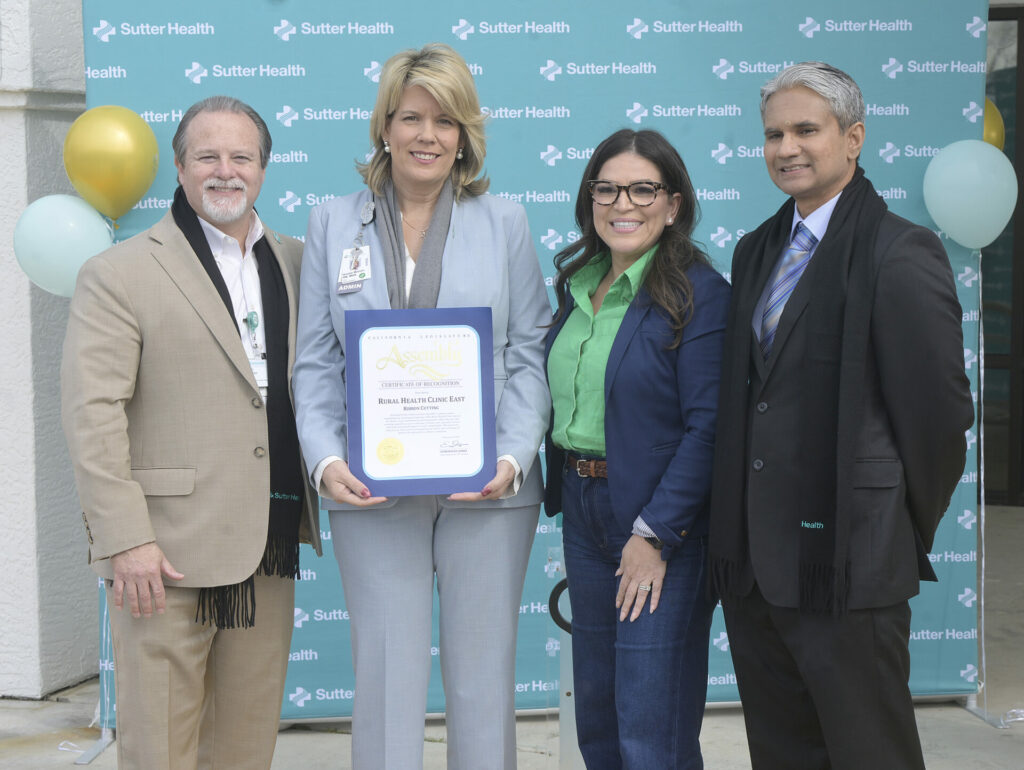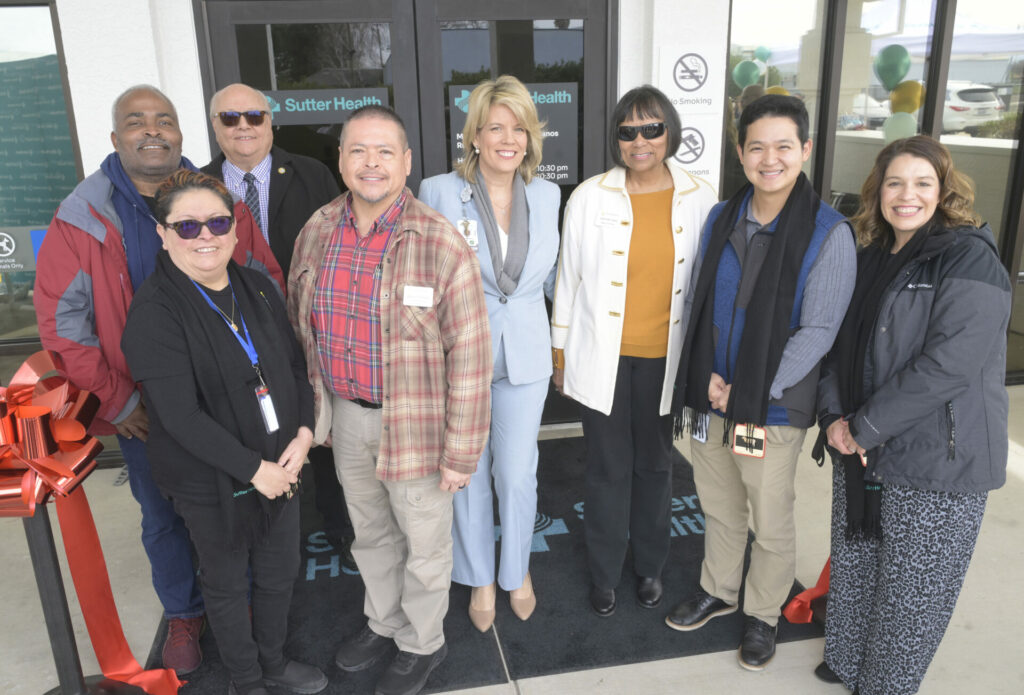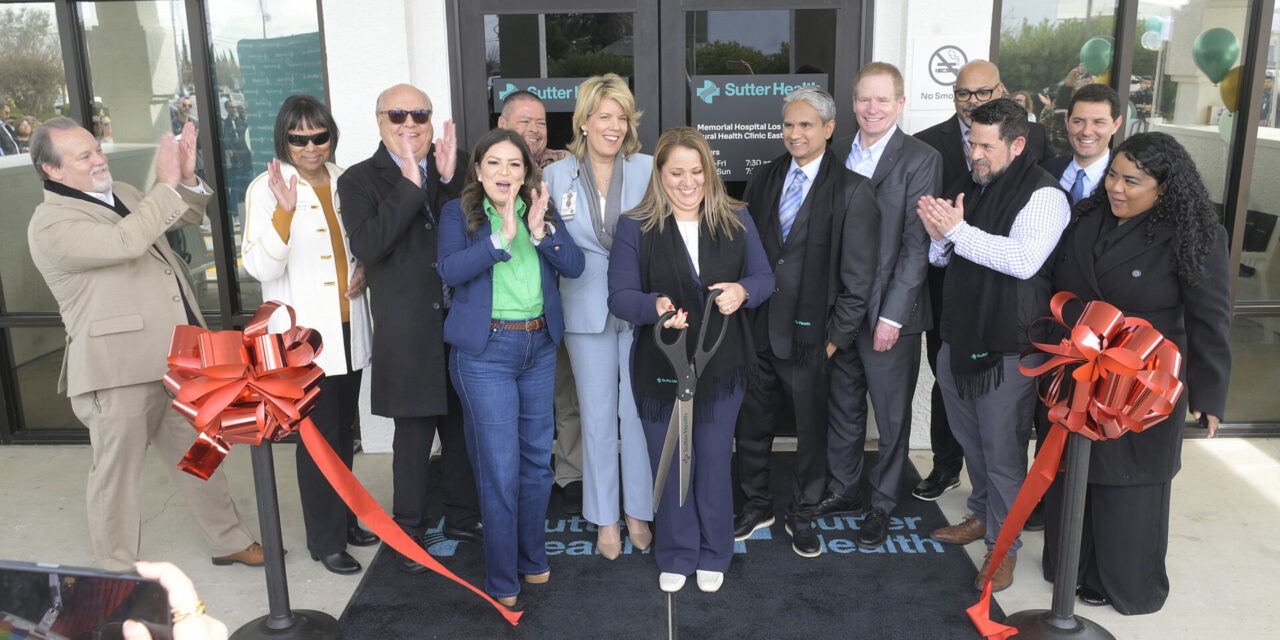
On Feb. 20, public officials, project partners, care teams and community members came together to celebrate the ceremonial ribbon-cutting of the new Sutter Health Memorial Hospital Los Banos Rural Health Clinic East.
Located at 801 West L St., the facility is the second Rural Health Clinic location in Los Banos, following the original site built 10 years ago.
The development of the new clinic reflects Sutter Health’s commitment to expanding access to healthcare throughout Northern California, especially in the Central Valley.
The ceremony brought together senior leadership within Sutter Health, hospital and clinic staff, architects and contractors who worked on the project, and multiple city council and staff representatives as well as state and federal elected officials
Los Banos Mayor Michael Amabile and Pro Tem Deborah Lewis attended, along with other council and planning commission members and city leadership staff.
State Assemblymember Esmeralda Soria and Congressman Adam Gray’s Field Representative, Karthik Prasad were also in attendance.
Attendees toured the newly renovated 3,200-square-foot space, which features four exam rooms, one treatment room, a welcoming reception area, and updated technology and equipment.
The facility will house 10 new primary and specialty clinicians and is expected to support up to 1,000 additional patient visits per month.
Though the building is not the largest in Sutter’s local network, Kristie Marion, CEO of Sutter’s Memorial Hospital Los Banos, said it was designed to provide the same consistent quality of care as any other Sutter facility.
“It’s definitely our most modern and visually welcoming facility,” Marion said. “When you walk in, it feels just like any other Sutter Health facility, whether it’s in Modesto or San Francisco, it’s the same.”
While the ceremony celebrated the new building, speakers consistently emphasized the importance of access.
Marion noted the clinic’s extended weekday hours and weekend availability as key features designed to support working families and commuters who can’t attend appointments during traditional 9-to-5 hours.
The existing Rural Health Clinic at 1253 W I St., just a short walk away, currently houses 24 clinicians providing primary and specialty care.
Marion said the new clinic will complement this location by reducing wait times and serving as part of a connected network.
Patients can call one central number to schedule appointments at either location, and providers can coordinate imaging, lab work, and follow-up care with the nearby hospital.
When necessary, referrals to out-of-town specialists within Sutter’s broader system can also be arranged.
One of the most significant additions at the new clinic is expanded behavioral health services, a gap Marion said has grown and become clearer in recent years.
“We do see more behavioral health patients post-COVID than we did a decade ago,” she said. “We see patients in the emergency room who are transferred out for care and then return not long after. This missing piece was consistent outpatient care. By adding that, we hope to help people live fuller lives that aren’t interrupted by crisis.”
The new space also supports enhanced ICU services at the hospital.
As Sutter recruits additional intensivists and pulmonary critical care physicians, patients discharged from the hospital will now have more local options for follow-up appointments, helping reduce readmissions.
The project was initiated last year after Vanessa Valdez-Pantoja, the Manager of the Rural Health Clinic, secured a $2.5 million grant from the Central California Alliance for Health.
Construction began shortly after the summer of 2025 and progressed smoothly, Marion said, crediting collaboration with city and county partners, as well as coordination with PG&E, for keeping the project on track.
“It was an excellent process all the way through,” she said, adding that community cooperation helped the project stay on schedule.
Marion emphasized that the clinic is designed to serve residents of all ages and backgrounds, offering flexible hours to accommodate families and workers.
The facility accepts Medicare, Medi-Cal and most insurance plans, and Sutter Health’s not-for-profit mission ensures financial assistance and charity care programs are available for qualifying patients.
“One thing I’m proud of is that this expansion allows us to serve the whole community,” Marion said. “It’s designed so people who work during the day can come in the evening, families can bring their children, and anyone who needs care has a place here.”
The clinic’s opening also reflects broader growth in Los Banos.
As new housing developments bring more families into the area, Marion said Sutter is monitoring patient volumes and service needs to stay ahead of demand.
“We’re always looking to address services and keep them adequate for the growth that’s coming into the community.”
For Marion, who grew up in Los Banos, the ribbon-cutting marked a meaningful moment.
“When I took this job, I said I’m going to leave things better than when I found them,” she said.
“When I was growing up, there weren’t many clinics to go to. I know what it means to have to travel out of town for care.”
Hearing residents express relief at saving an hour-long drive or gaining easier access to preventative services affirmed the project’s impact, she said.
“I feel proud that it’s adding value,” Marion said. “It’s allowing people who may not have had the opportunity to get regular health care to have it here in their own community.”