The railroad’s historical route through town is simple, north west to south east. But once, very early in its history, it was more complicated.
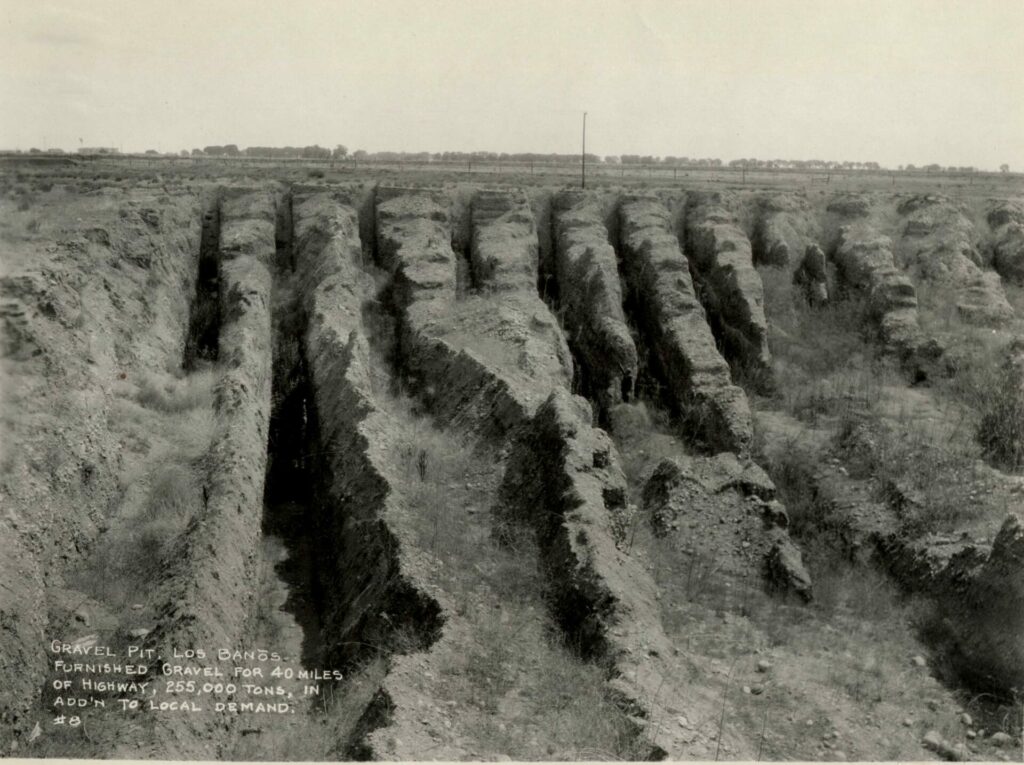
A forgotten spur line served one of Los Banos’ most overlooked, but at the time, most valuable export: Gravel. The small rocks you drive on, decorate with and that you might not notice throughout your day were once described as “worth as much as gold” by the Merced Express.
The spur broke off from the mainline at what was the western edge of town. Just east of Second Street. The tracks then headed directly south, intersecting the K and 3rd street intersection.
In the rough area of the Center Avenue and Pacheco Boulevard intersection, the tracks curved southwest. Then it crossed the canal and curved directly west, where Cardoza Road turns into a roundabout. Before hitting Los Banos Creek, it turned south and stayed going south for roughly a mile.
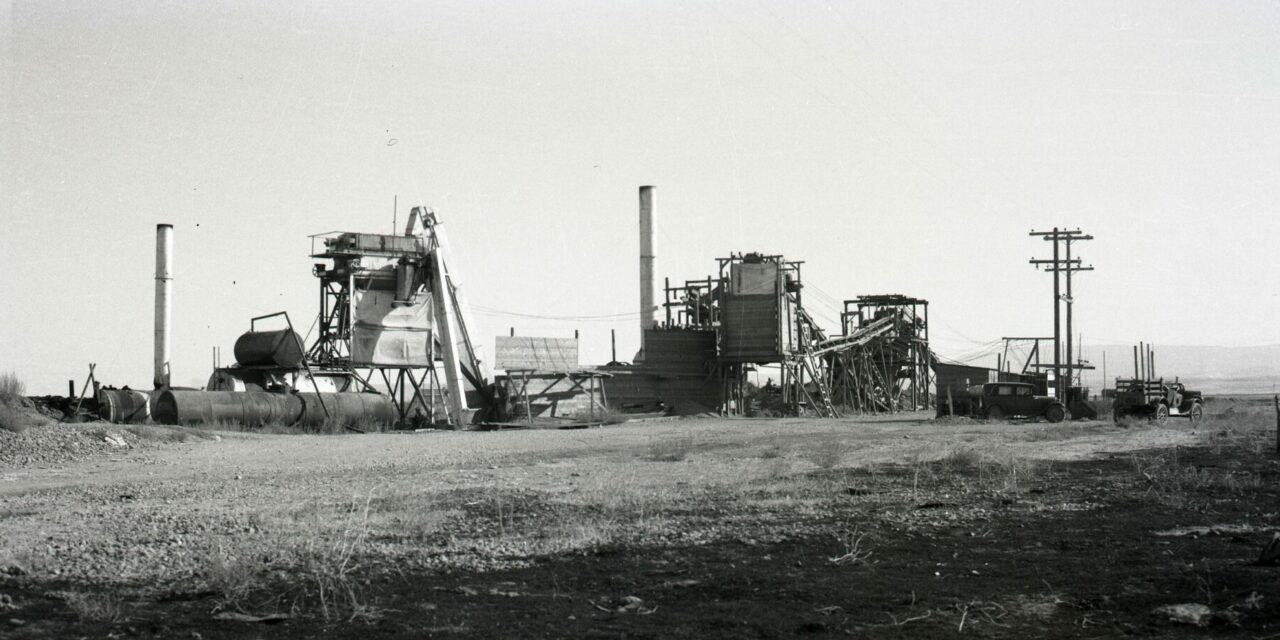
At the end of the line was the original Los Banos Gravel Pit. It was started by the Southern Pacific Railroad (SPRR) in 1891 to feed its insatiable need for gravel.
According to the Merced Express, the creekbed was the only Gravel identified “in a stretch of over a hundred miles.” Gravel was in such dire need that SPRR was building the westside line with minimal ballasting, sometimes building the track on bare dirt before raising it when gravel could be acquired.
The venture was started by W. D. Fairchild, a ‘right-of-way man’ for the SPRR. His full name was not found. Fairchild discovered that the Los Banos creekbed, from Pioneer Road to five miles upstream, was perfect for the railroad.
Despite the necessity, Fairchild struggled with nearby landowners to get the spur line mapped out. Only by going through the lands of Miller and Lux and the direct beneficiaries could a route be secured. The whole process from discovery to spur line construction lasted two months. The Merced Express reported its completion on May 5, 1891.
Within three months of opening, on Aug. 8, the Merced Express reported 1,200 gravel cars leaving the pit in a single week. “Turned out to be the finest gravel pit they ever opened up. They went down twenty feet in the creekbed, and the gravel never gave out,” Bascom Newton told local historian Ralph Milliken in 1933. Newton’s father owned the land where the pit started.
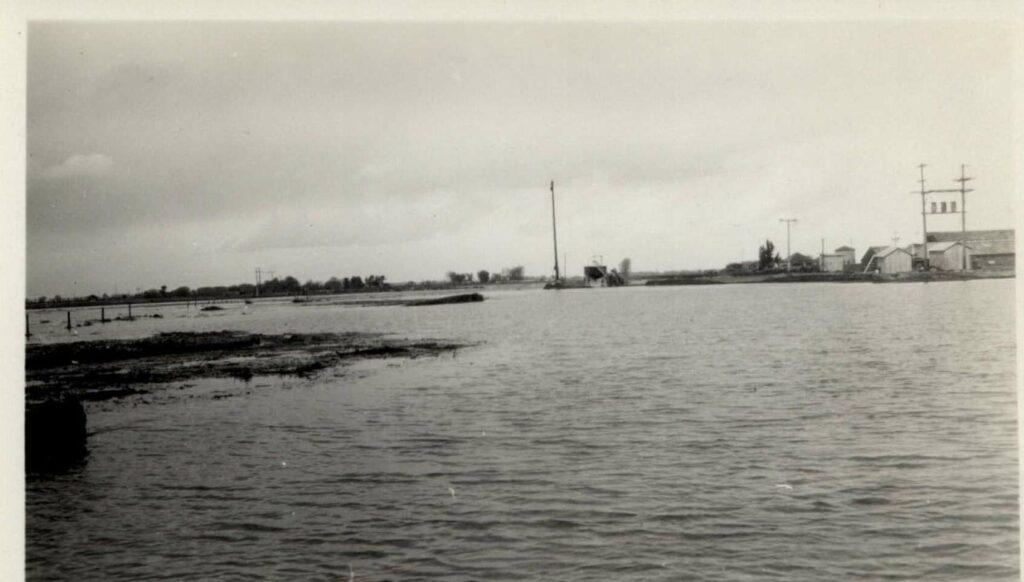
“They dug an awful hole in that creek. It was all a big lake (when it rained),” Newton reminisced. He remembered two large steam shovels carving out the creek. His brother was asked to operate a restaurant out at the pit, feeding around 80 to 100 men a day, including many from Asia.
Meals were just 33 and one-third cents. Those men loaded empty cars stored just north of Pioneer Road and got them ready for four to six trains a day. To help the operation, a telegraph car was kept at the pit for the workers.
Gravel they dug up would be used by SPRR and municipalities as far north as Tracy and as far south as Bakersfield. Even Henry Miller used gravel from the pit to maintain roads within Los Banos. On April 16, 1892, the President of the SPRR, C. P. Huntington, visited the pit personally to view the work.
When and why the operation stopped is not entirely clear. All evidence shows it ending sometime between 1900 and 1910. The pit itself was seasonal; in the rainy season, all work had to be stopped.
One fact that can be agreed upon is that the SPRR started to abandon the pit after starting one in Newman. Milliken heard three different stories that made it to his archive: W.J. Stockton told him that Will Jamison kicked SPRR after his lease expired, Will Wood told Milliken it was actually J. McCarthy who did so and F. M. Chappel said it was the Newtons.
All three of them owned parts of the spur, and especially the Gravel Pit. Wood remembered McCarthy denying the renewal of SPRR’s lease, which included the main rail yard for the pit to the east of the creek.
The SPRR then tried to lease Wood’s land on the west side of the creek, but that didn’t work, killing the spur.
No matter whose lease it was, leases were up, and the landowners did not want to renew. Landowner demands, whatever they may have been, were not met. The Los Banos Gravel Pit Spur was ordered to be torn up. Within about 15 years, the crucial gravel pit began to fade into memory, one that has continuously degraded with time.
Nowadays the abandoned pit is the site of Triangle Rock Product, who owns the entire old pit. Continuing the legacy set in motion by W. D. Fairchild.
According to Chris White, Executive Director of the San Joaquin River Exchange Contractors Water Authority (SJRECWA), the pit will soon be coming into its next chapter.
The site is planned to become part of the Los Banos Creek Recharge and Recovery Project, which would use the former excavation to capture and recharge available surface water for later recovery during dry periods.
“A place once used to supply the rock that helped build railroads, roads and communities throughout the San Joaquin Valley may now help support the region’s future water supply. More than a century after the first gravel cars left the pit, the site remains tied to the infrastructure and resilience of the west side of the Valley,” White told the Express.
The total capacity, according to the SJRECWA website, is 17,000 acre feet. White said construction will start in 2027.
This article was the culmination of research made possible thanks to the Merced County Surveyor, California State Railroad Museum, Chris White and the Los Banos Milliken Museum.