Los Banos has a fascinating history, going back to the 19th century. Anyone in and around Los Banos can get a feel of this history by taking a walking tour on Saturday, Aug. 16.
The Los Banos Arts Council and the Milliken Museum Society will be hosting “Picture the Past,” a free guided historical walking tour of downtown Los Banos on Aug. 16, from 10 a.m. to noon.
The one-mile walking tour will begin at the Henry Miller Plaza and end at Jams 209 and will feature the history of the development of downtown through photos of the past and story-telling about historical buildings.
For recent residents of Los Banos, the event will serve as a “welcome” and introduction to the community. For those that have been here a while it will serve as a reminder of the deep roots and colorful history.
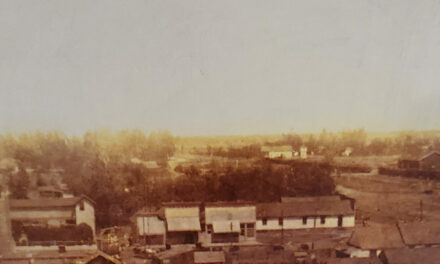
Los Banos’ origin can be traced to 1889 when it sprouted with the coming of the railroad. Henry Miller, the town’s benefactor, erected prominent brick and wood structures such as the General Merchandise Store, a three-story Hotel and even an Opera House.
These buildings served as an anchor for the developing town and portrayed legitimacy. For over 135 years the Los Banos downtown has been evolving — influenced by fire, earthquakes and public policy that has provided a colorful and interesting history.
Much of the city’s history is on display at the Milliken Museum, a historical museum that has been around ever since Ralph Milliken opened it more than a half-century ago.
Milliken came to the Westside in 1910 after graduating from Stanford University. He was recruited by Miller & Lux as an accountant and, after a brief stint with the company in Firebaugh, transferred to the Canal Farm Ranch in Los Banos and married a local Los Banos teacher, Lucy Beth Wilson.
Ralph Milliken realized early that his passion wasn’t in accounting but in Miller & Lux and in Westside history. He began oral interviews with some of the old-timers in the 1920s through the 1950s.
He took thorough notes and transmitted those through 2,500 type-written pages of meticulous first-hand accounts of the European settlement of the region.
He also captured the romantic Californio era of the region with his book “The California Dons,” with accounts of the Pacheco family and the Westside relationship with San Juan Bautista Mission.
Milliken’s work included collaboration with renowned historian Frank Latta of Gustine, recognizing and paying tribute to the Native Americans that resided in the area for thousands of years prior to the European settlers.
Milliken’s numerous manuscripts, publications, archives and collections serve as the foundation of our documented history and became museum-worthy in 1954 when the County of Merced, led by Supervisor Emory O’Banion, partnered with the City of Los Banos to build a small museum in the new Pacheco Park.
It was the Los Banos Museum until 1968 when the museum building was expanded and named the Milliken Museum.
The Los Banos Art’s Council and the Milliken Museum Society look forward to sharing on Aug. 16 the photos and the stories that have made Los Banos so wonderfully historical.