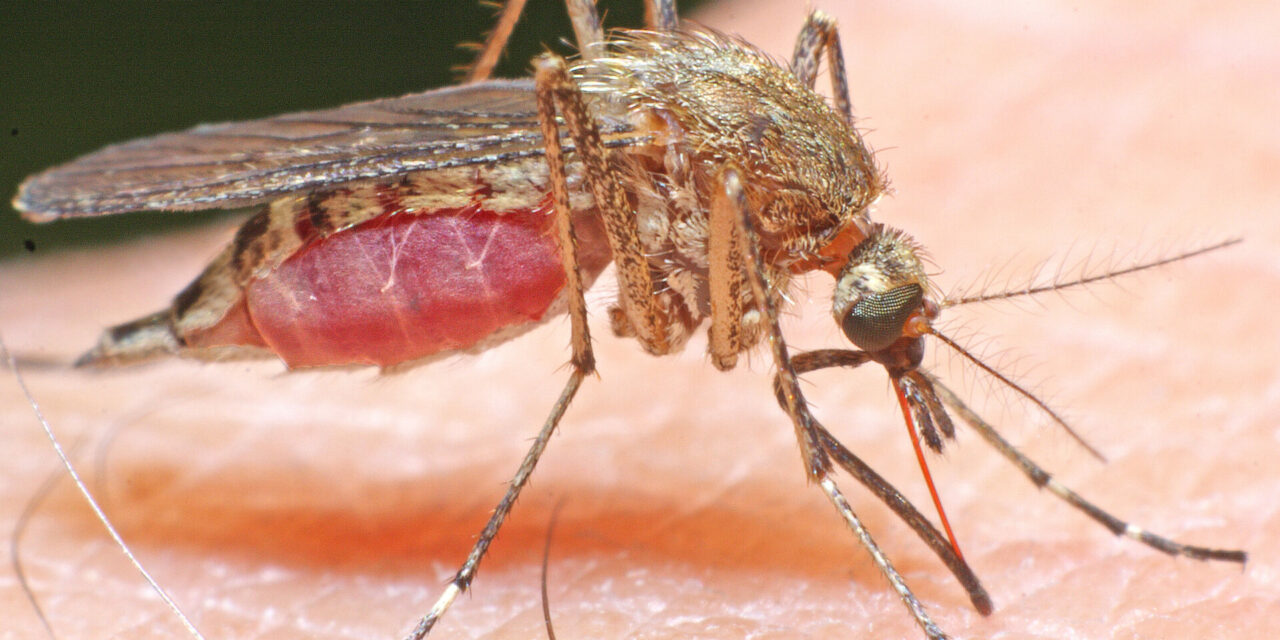
Serving the county for 80 years, the Merced County Mosquito Abatement District has its work cut out for it here in the Westside. Every year, its trucks and planes spray the county, keeping mosquito populations and the diseases they carry suppressed. The main disease it’s fighting against is West Nile virus.
Public Information Officer Adara Culpepper told The Express that mosquitoes aren’t born with the disease: Mosquitoes only get it if they bite an infected bird. The only detection currently is in Planada, but it is an evolving situation. Many birds fly through the county as part of the Pacific Flyway.
The district has partnered with the Centers for Disease Control and Prevention (CDC) to put out a Skeeter Meter. The public awareness tool measures the risk of people contracting the virus. It is currently at “lower.”
“While West Nile virus is present in the environment, we’re detecting far fewer Culex mosquitoes and virus-positive samples than we were at this time last year,” Culpepper said. She encouraged the public to keep an eye on the meter on their social media and website at mcmosquito.org.
Culpepper explained to The Express that the Westside has three major factors affecting our mosquito population.
She said that agriculture, which takes up 93 percent of land in the county, creates a lot of standing water for them to breed, especially flood irrigation of pastures that “has the potential to produce millions of mosquitoes,” Culpepper said.
Next are the invasive Aedes aegypti mosquitoes. “Since 2017 it’s infested every single neighborhood in our county. They bite all day long.
“They look for teeny tiny sources of water, as small as a bottle cap. When they lay their eggs inside of containers, those eggs are good in a dry state for 5 years,” Culpepper said. They’re adapted to being right outside homes and “primarily feed on human blood.”
A major unique factor for the Westside is its 160,000 acres of wetlands. “It’s the largest contiguous freshwater wetland in the United States west of the Mississippi River. The Westside (is) heavily affected from the wetland,” Culpepper said.
“We do our best to reduce the population, but we have a very unique environment that we’re dealing with,” she continued.
The district consists of 22 employees running on a budget of roughly $3 million. They plan their operations daily. Every day, 30 to 40 traps in the county are set and studied. Based on the findings, they design the day’s operations.
Most of their spraying work is done at night using adulticide and larvicide. Adulticide kills the adults on contact. Larvicide settles into the standing water and kills the larvae. The chemicals break down in the sun, and night is when most mosquitoes are active.
The main tool in the district’s arsenal is spray trucks, but its most recognizable is low-flying planes. They can only use adulticide and only fly if two conditions are met.
There must be high concentrations of Culex mosquitoes that can carry West Nile virus and detection of the virus for them to fly. There is no set schedule, and notices go out roughly midday.
The district doesn’t fight mosquitoes alone—it also relies on educating the public on how to keep up the fight. Culpepper explained that the public can help by removing standing water within three days.
“Look for really small sources of water, as small as a bottle cap. Try to get rid of that. We’ve found them in areas from a chip bag (to) plant saucers,” she said.
One of the biggest risks for West Nile is unmaintained swimming pools. Culpepper explained that Culex mosquitoes love them. The district provides free larvicide treatment for unmaintained pools.
In addition to prevention, the public can protect itself using repellent sprayed on bare skin and clothes. Culpepper encouraged the public to use sprays with 30% DEET, picaridin or oil of lemon eucalyptus.
This mosquito season has seen a lower population than usual, according to Culpepper. She explained that the district has a more proactive strategy than before following a difficult season last year.
It started with a “heavy education campaign” and then did “as heavy larviciding as possible.” They hired additional staff and treated “all the curbs and gutters throughout the county well ahead of time,” Culpepper said.
She said the strategy, in addition to the community helping, “made a dramatic difference, and it’s pretty incredible.”